

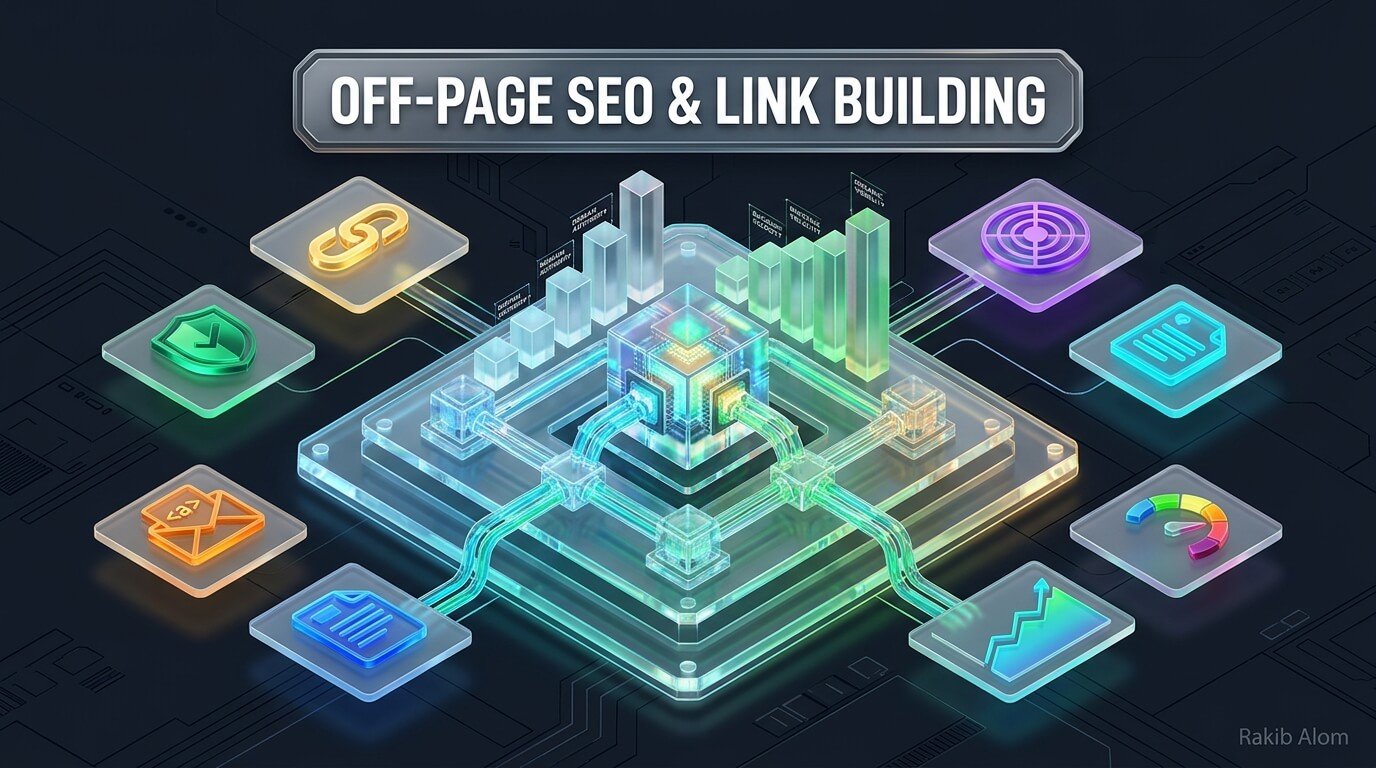
Executive Summary: The Real Power of Off-Page SEO
Getting to the top of Google takes more than great writing on your own website. Search engines need proof from the rest of the web that your business is trustworthy, authoritative, and helpful. Off-page optimization is the process of building that external reputation through high-quality links, digital PR, brand mentions, and industry citations. This guide breaks down link building into simple, clear steps that anyone can follow to earn real authority, outrank competitors, and attract consistent organic customers without risking search penalties.
What Is Off-Page SEO?
Think about how people choose a doctor, an accountant, or a mechanic in everyday life. You might look at their business card or read their brochure, but what really convinces you is a recommendation from a friend you trust. Search engines work on the exact same human principle. While on-page optimization covers what you say about yourself on your own website, off page seo represents what the rest of the internet says about you.
Every time an established publication, an industry blog, or a local business links to your web pages, search engines treat that link as a vote of confidence. When multiple reputable websites point toward your content, search algorithms conclude that your material must be accurate, useful, and worth showing to searchers. Having strong off-page seo signals is often the deciding factor that separates pages stuck on page two of Google from the top three spots that capture most of the clicks and sales.
Many business owners pour hundreds of hours into designing beautiful web pages, only to wonder why their visitor count remains flat. The hard truth of modern search is that even the best article in the world will struggle to rank if no other websites endorse it. Focusing on seo off page signals helps bridge the gap between having great information and getting people to actually see it. By building genuine relationships with editors, industry journalists, and partner websites, you create an external network of trust that algorithms reward with top search placements.
Search engines have grown remarkably intelligent over the past decade. Years ago, people could trick algorithms by buying thousands of low-quality links on spammy discussion forums and automated directories. Those outdated shortcuts no longer work and will quickly lead to heavy manual penalties that remove your site from search results entirely. Today, successful external promotion focuses on quality, topical relevance, and real human connection. Learning how to earn links the right way will protect your website for years to come while generating steady streams of targeted traffic.
Backlinks: What They Are and Why They Matter
To succeed with external promotion, you need a clear grasp of how links function behind the scenes. Having seo backlinks explained in plain terms removes the mystery from the process. In simple terms, a backlink is an incoming hyperlink from an external website that points directly to a page on your domain. When a user clicks that link, their web browser takes them directly to your site to read a quote, view a tutorial, or purchase a product.
Search engines view links as digital pathways. As search crawlers browse the web, they follow these links from one page to another, discovering new articles and updating their index. More importantly, each link passes a certain amount of authority and trust, historically referred to by Google as PageRank. When an authoritative news website or respected university mentions your research and links to your site, that link carries significant algorithmic weight. Earning high-quality seo backlinks helps elevate your entire domain, making all of your published pages rank higher in organic results.
Not every link carries the same technical value. When you inspect links across the web, you will notice different HTML attributes that tell search engines how to treat the connection. A standard link passes full ranking credit from the sender to the receiver. A link with a nofollow attribute tells search engines that the publisher cannot formally endorse the linked page, which is common in blog comments and social media posts. Links marked with sponsored attributes indicate paid partnerships or advertisements. While nofollow and sponsored links may not pass traditional ranking authority, they still bring valuable referral traffic and build brand awareness with real human audiences.
Topical relevance is just as critical as domain authority. If you operate an accounting consultancy, a single link from a respected financial magazine is far more valuable than twenty links from video gaming blogs or recipe websites. Search engines look closely at the relationship between the two connected websites. When the context makes logical sense to a human reader, the search algorithm rewards that link with maximum authority. Focusing on relevant backlinks seo ensures that every earned link reinforces your specific industry expertise.
The Core Rules of Modern Link Building
Building external authority requires patience, ethics, and a long-term mindset. The practice of seo link building is fundamentally about building digital relationships with other professionals in your market. When done properly, it creates mutually beneficial partnerships where both parties provide value to their audiences. When done poorly, it looks like spam and alienates the very people you want to work with.
The first rule of sustainable link building seo is to avoid manipulative link schemes. Some companies promise to deliver hundreds of links overnight for a few dollars. These offers always rely on private blog networks, hacked websites, or automated spam bots. Search engine engineers dedicate immense computing power to detecting and neutralizing these artificial link patterns. When algorithms catch a site using automated schemes, they either devalue the links completely or issue a manual action that wipes out organic traffic. Building ten authentic links from respected blogs will always deliver better business results than buying ten thousand spam links from low-quality networks.
Another essential concept is natural link velocity. Link velocity refers to the speed at which your domain acquires new links over time. A healthy, growing business naturally gains a steady trickle of links as it publishes new content, announces product updates, and participates in industry events. If a brand-new website suddenly gains two thousand links in a single week and then zero links for the next three months, search engines flag that unnatural spike as suspicious. Consistent, steady link acquisition signals genuine business growth and keeps your domain in good standing.
Anchor text distribution also requires careful attention. Anchor text is the clickable text snippet that houses the hyperlink. In natural editorial writing, different websites refer to your business in varied ways. Some will use your company name, others will use the exact title of your article, and some will write natural phrases like check this breakdown or visit their website. If ninety percent of your incoming links use the exact same commercial keyword phrase, search algorithms recognize that the links were artificially manipulated rather than earned naturally. Maintaining a diverse mix of branded, topical, and natural anchor text keeps your backlink profile safe and strong.
Proven Link Building Strategies That Deliver Real Results
Winning top rankings requires moving beyond passive hope and taking proactive steps to earn attention. Relying on hit-or-miss tactics wastes time and produces inconsistent outcomes. Below are five proven seo backlinks strategies that consistently help businesses of all sizes earn high-authority endorsements from reputable publications.
1. Creating Data-Driven Research and Original Surveys
Journalists, content creators, and industry bloggers are always looking for reliable statistics and fresh data to support their articles. When writers draft news stories or educational guides, they frequently cite original studies to validate their points. If you survey your customer base, analyze proprietary customer trends, or publish an annual benchmark report, you create a natural magnet for links. Other websites will gladly cite your study and include an authoritative seo link pointing directly to your original data source.
To make your research easy to reference, summarize your core findings with clear visual charts, bulleted key takeaways, and concise summary paragraphs. When a busy writer lands on your report, they should be able to identify the most compelling statistics within thirty seconds. Outreach for data-driven content is remarkably effective because you are offering writers factual evidence that enhances their own work, rather than asking for a favor.
2. The Upgraded Skyscraper Technique
The Skyscraper Technique involves identifying popular articles in your industry that have already earned dozens of links, creating a significantly better resource on that exact topic, and reaching out to the websites linking to the older page. The key to making this work today is focusing on true informational superiority rather than just making the article longer. Adding fluff or repetitive paragraphs does not make an article better; adding practical templates, clearer steps, updated screenshots, and real-world case studies does.
Once your superior resource is published, review the backlink profile of the competing pages using audit tools. Reach out to the site owners with a polite, helpful email. Let them know that you enjoyed their article, mention that one of their external references is outdated or missing key modern developments, and suggest your comprehensive guide as an alternative reference. Because you are helping them keep their own content fresh and accurate for their readers, conversion rates on these outreach campaigns can be remarkably high.
3. Digital PR and Reactive Media Quotes
Journalists from major news outlets, business publications, and industry blogs frequently seek commentary from qualified experts to quote in upcoming stories. Platforms like Connectively, Featured, and Qwoted connect reporters directly with founders, marketers, and technical specialists who can share firsthand knowledge. When a journalist uses your insight, they typically credit you with your name, job title, and a link back to your business website.
Responding quickly is the secret to winning digital PR placements. Journalists work on tight editorial deadlines, often needing quotes within a few hours of posting their queries. Set up email alerts for your relevant industry categories and keep your responses concise, focused, and free of sales pitches. Give the reporter two or three clear, quotable sentences that directly answer their prompt. Over time, consistent media outreach can earn links from some of the most authoritative news publications in the world.
4. Reclaiming Unlinked Brand Mentions
As your company grows and participates in industry discussions, other websites will naturally mention your brand name, your products, or your team members in their articles. In many cases, the author will mention your company positively but forget to include a hyperlink to your website. Reclaiming these unlinked brand mentions represents one of the quickest, highest-converting link building opportunities available.
Set up automated web monitoring alerts for your company name, proprietary product names, and executive leaders. Whenever an alert notifies you that a new article mentioned your brand without linking, send a short, friendly note to the author or webmaster. Thank them warmly for mentioning your work, and politely ask if they would be open to turning the brand mention into a clickable link so their readers can find your website easily. Most editors are happy to make this small update because the mention is already live on their page.
5. Broken Link Building
The internet changes rapidly. Websites redesign their navigation, archive old articles, and shut down operations, leaving behind broken links on thousands of active web pages. When a website links to a page that no longer exists, it creates a frustrating dead end for visitors and harms the host site’s user experience. Broken link building is the helpful practice of finding these dead links on relevant industry resource pages and offering your content as a working replacement.
Audit popular resource pages and comprehensive guides in your industry using link checking extensions. When you find a link returning a 404 error, check what the original page was about. If you have an article that covers the same topic—or if you can create one that does an even better job—send a polite email to the site administrator. Inform them of the broken link on their page, specify its exact location, and suggest your working article as a seamless replacement. You save the webmaster time and effort while earning a natural, contextual link in return.
The Ethical Guide to Guest Posting for Brand Authority
Publishing articles on respected industry blogs has been a staple of digital marketing for over a decade. When approached with integrity, seo guest posting allows you to share your knowledge with an established audience, build personal authority, and earn relevant contextual links. However, the difference between high-value guest blogging and low-quality article spam comes down to editorial standards.
Low-quality guest posting involves submitting generic, shallow articles to websites that exist solely to sell links. These sites publish content on every unrelated topic imaginable—from car insurance to home gardening—and accept any submission that pays a small fee. Search engines easily identify these link farms and discount their links entirely. In contrast, ethical guest posting means targeting legitimate, editorially governed publications that maintain strict writing standards and have an engaged human readership.
Begin by compiling a list of respected publications in your specific vertical. Read several of their recent articles to understand their tone, their audience, and the technical depth they expect from contributors. Look for topics where their blog has an informational gap that aligns with your unique expertise. When you pitch an editor, write a personal message that references their recent content, explains why their readers would care about your idea, and outlines three distinct article concepts with brief bullet points.
When your pitch is accepted, treat the guest draft with the same care and polish that you would give to an article on your own website. Provide original examples, clear step-by-step instructions, and thorough answers. Include natural references to other helpful resources across the web, and link back to a specific, highly relevant educational resource on your own site where it adds genuine context for the reader. Avoid stuffing commercial anchor text into the body copy. Editors respect writers who focus on educating their audience first, and building strong relationships with editors often leads to recurring writing invitations and long-term brand advocacy.
Local Citations and Directory Submissions
For service businesses and physical storefronts, local visibility is essential for attracting customers who live and work nearby. Search engines rely on consistent business listings across the web to verify that a local business is authentic, active, and located where it claims to be. An accurate seo citation consists of any online mention of your business name, address, and phone number, commonly referred to as NAP data.
Maintaining absolute consistency across all citations is the golden rule of local search. If your address is listed as Suite 200 on Google Business Profile, but appears as Apt 2B on another directory, search algorithms can become confused about your real location. Take the time to audit your core business data across major data aggregators and review platforms. Ensuring that your business name, phone number, website URL, and operating hours match perfectly across every profile builds trust with local ranking algorithms and helps your business appear prominently in local map packs.
Submitting your website to a selective seo directory can also provide foundational trust signals when starting a new site. In the early days of the internet, webmasters submitted their links to thousands of automated directories with zero editorial oversight. Modern search engines completely ignore those spam directories. However, reputable, human-curated directories—such as your local Chamber of Commerce, the Better Business Bureau, and respected trade associations—provide genuine business credibility.
Prioritize industry-specific directories over generic submission sites. If you run a dental clinic, being listed in verified dental professional registries carries strong topical relevance. If you operate an engineering firm, holding memberships in recognized technical associations reinforces your expertise. These legitimate directory listings not only provide trusted backlinks, but they also direct qualified customers directly to your consultation booking pages.
Top 5 Platforms: Backlink Audit and Outreach Tools
Managing an external outreach campaign by hand quickly becomes overwhelming without reliable software. Performing systematic seo backlink analysis allows you to monitor new links, audit your competitors, find broken link prospects, and protect your domain against negative spam. Using a dedicated seo backlinks checker alongside modern seo backlink tools empowers marketing teams to streamline their research, evaluate domain strength, and make informed outreach decisions. Below is a detailed review of the five leading platforms available today.
1. Ahrefs
Ahrefs is widely recognized as one of the most powerful and comprehensive link analysis platforms in the search industry. The platform operates its own web crawler, AhrefsBot, which actively browses billions of web pages daily to maintain a massive live link database. When you input any domain or individual URL into its Site Explorer tool, Ahrefs displays a complete breakdown of referring domains, total backlinks, new and lost links, anchor text distribution, and proprietary authority metrics like Domain Rating.
The platform excels at competitive link research. By using the Link Intersect feature, you can input three or four of your top competitors to see which websites link to all of them, but not yet to you. These overlapping links represent high-probability outreach targets because those site owners have already demonstrated a willingness to link to resources in your niche. Ahrefs also provides detailed historical graphs showing how your link profile has grown over months and years, helping you track the return on your outreach efforts. While the monthly subscription is an investment, its data accuracy makes it a top choice for serious marketers.
2. Semrush
Semrush delivers an all-in-one search marketing suite that pairs deep link analysis with practical outreach management. Its Backlink Analytics tool provides fast, intuitive overviews of any domain’s link health, categorizing inbound links by authority score, link type, anchor text, and geographic location. The platform updates its backlink database rapidly, allowing you to spot newly acquired links or detect lost connections before they impact your organic rankings.
One of the standout features of Semrush is its integrated Link Building Tool. Rather than forcing you to manage outreach through separate spreadsheets and email clients, Semrush helps you discover potential outreach prospects, find verified contact email addresses, and send customized email sequences directly from the platform. It tracks whether prospects open your emails and reminds you when it is time to send a polite follow-up. Combining competitive analysis with built-in email outreach makes Semrush an exceptional choice for busy marketing teams that want an organized, all-in-one workflow.
3. Moz Pro
Moz Pro is one of the pioneering platforms in the search optimization industry, and its Link Explorer tool remains a trusted resource for evaluating website authority. Moz created Domain Authority and Page Authority, two of the most widely referenced scoring metrics used by marketers worldwide to estimate how likely a domain is to rank in search results. Its link index tracks millions of active domains, providing clear, easy-to-read dashboards that suit both beginners and experienced practitioners.
A unique capability within Moz Pro is its Spam Score metric. Spam Score evaluates incoming links against twenty-seven distinct technical signals commonly found on penalized or banned websites. If your website experiences an unexpected influx of suspicious links, Moz highlights which linking domains carry elevated risk, allowing you to investigate the source and take protective measures. Moz Pro is known for its clean interface, helpful educational documentation, and accessible entry-level pricing plans, making it an appealing option for small businesses taking their first steps into external optimization.
4. Majestic SEO
Majestic SEO takes a unique, mathematically rigorous approach to backlink intelligence by focusing exclusively on link data rather than attempting to be a general marketing suite. The platform is famous for its proprietary Flow Metrics: Trust Flow and Citation Flow. Citation Flow measures the volume and weight of links pointing to a URL, while Trust Flow measures how closely connected those links are to a curated seed list of highly trusted, authoritative websites.
By comparing Trust Flow to Citation Flow, marketers can immediately evaluate the quality of any domain. A website with high Citation Flow but very low Trust Flow typically has a spammy link profile built on automated blog comments and low-tier directories. Conversely, a balanced score indicates an authentic, trustworthy domain. Majestic also offers a Topical Trust Flow feature that categorizes a website’s authority by industry topic, such as computers, health, or finance. This topical breakdown makes it easy to confirm that a prospective partner has real authority in your specific niche before reaching out to them.
5. BuzzStream
BuzzStream is a dedicated relationship management and outreach platform designed specifically for link builders and digital PR professionals. Unlike data crawlers that focus primarily on link indexing, BuzzStream solves the practical operational challenge of organizing outreach campaigns across teams. When you browse the web looking for article ideas or outreach targets, the BuzzStream browser extension allows you to research the website, scrape contact information, and add the prospect to your campaign database with a single click.
The platform acts as a centralized customer relationship manager for your outreach efforts. It tracks entire email conversation histories, logs team notes, monitors whether acquired links remain live on partner websites, and automates customized follow-up emails without sounding like an impersonal robot. If you manage multiple outreach campaigns or collaborate with freelance writers and agencies, BuzzStream keeps every communication organized and prevents duplicate outreach to the same editors. It is an invaluable operational tool for scaling outreach efficiently.
How to Evaluate Professional Link Building Services
Many growing businesses reach a point where managing outreach in-house becomes too time-consuming. Researching prospects, creating linkable assets, vetting editor guidelines, and sending personalized emails requires dedicated hours every week. For companies that lack the internal staff to execute continuous outreach, partnering with specialized seo link building services or experienced seo backlinks services can be a practical way to build authority while focusing on core business operations.
However, the marketplace for external promotion is filled with risks. Thousands of self-proclaimed agencies promise cheap, fast results using automated networks and private link farms. Hiring the wrong provider can result in severe algorithmic penalties that take months or years to recover from. When evaluating prospective seo backlink services, asking the right questions and demanding total transparency will protect your business from costly mistakes.
A trustworthy provider will always practice manual, personalized outreach. When you interview an agency, ask them to explain their exact process for finding prospective partner websites. If they claim to have pre-existing partnerships with thousands of websites ready to publish your link immediately, they are almost certainly running a private blog network or dealing with low-quality link farms. A legitimate partner will research fresh prospects tailored specifically to your niche, craft bespoke pitches, and secure editorial placements on genuine publications that have active organic traffic.
Insist on reviewing and approving target publications before any content is published. A reputable seo link building service will provide transparent reports showing the domain authority, organic traffic volume, and topical relevance of every prospective website. They should also provide full drafts of any guest articles for your editorial approval before submission. If an agency refuses to disclose where your links will appear or hides their methods behind proprietary secrets, walk away immediately. Real authority takes hard work and open communication; genuine professionals are always proud to show you their work.
Off-Page SEO Comparison Table and Strategy Matrix
Every link building method requires a different balance of time investment, creative effort, financial cost, and expected return. Choosing the right mix of tactics depends on your current website authority, your internal resources, and your competitive landscape. Reviewing these options side by side helps you prioritize the most effective activities for your current growth phase.
The table below provides a comprehensive comparison of the primary external optimization strategies, detailing the skill level needed, typical time to see results, risk factors, and overall ranking impact.
| Link Building Tactic | Effort Required | Time to Results | Relative Cost | Risk Level | Ranking Impact |
|---|---|---|---|---|---|
| Original Data & Industry Research | High (Survey & Data Analysis) | 60–90 Days | Moderate to High | Extremely Low (100% White-Hat) | Very High (Passive Compounding Links) |
| Digital PR & Expert Media Quotes | Moderate (Daily Responses) | 30–60 Days | Low (Time Investment) | Zero Risk | High (Top-Tier News Endorsements) |
| Targeted Editorial Guest Posting | High (Writing & Pitching) | 30–45 Days | Moderate (Content Creation) | Low (When Quality Focused) | High (Contextual & Targeted) |
| Unlinked Brand Mention Outreach | Low (Simple Email Requests) | 7–14 Days | Very Low | Zero Risk | Moderate (High Conversion Rate) |
| Broken Link Replacement | Moderate (Prospecting & Emails) | 30–60 Days | Low | Zero Risk | Moderate to High |
| Local Citations & Niche Directories | Low (Form Submissions) | 14–30 Days | Low | Low (When Curated) | Moderate (Essential for Local SEO) |
| Automated Directory & Forum Links | Very Low (Bot Software) | Immediate | Very Cheap | Extremely High (Penalty Risk) | Negative (Causes Search Drops) |
A Simple 90-Day Plan to Build Real Website Authority
Starting an external promotion campaign can feel intimidating if you try to do everything at once. Breaking your efforts into clear monthly milestones makes the work manageable and ensures that you build a solid foundation before expanding into advanced outreach. Below is a practical ninety-day blueprint that any team can put into action immediately.
Month 1: Audit, Cleanup, and Foundational Trust
The first thirty days should focus on understanding your starting position and fixing any existing weaknesses. Run a complete audit of your current backlink profile using an established audit tool. Look for any broken incoming links pointing to 404 pages on your site. If an authoritative website is linking to a page you moved or deleted, set up a simple 301 redirect to send that valuable equity to an active, relevant page on your site.
Next, secure your foundational citations. Claim and verify your Google Business Profile, create your company page on major business directories like LinkedIn, Bing Places, and Yelp, and ensure that your company name, address, phone number, and website address are perfectly consistent across all profiles. Set up daily brand monitoring alerts so you are notified whenever another website mentions your company. Reclaim any existing unlinked mentions by reaching out with a polite, friendly note.
Month 2: Creating Linkable Assets and Warming Relationships
With your foundation secure, dedicate your second month to building assets that other people will naturally want to reference. Choose one core topic where your business has unique expertise, and create an exceptional guide, an interactive calculator, a downloadable checklist, or a original survey report. Spend extra time polishing the design, formatting, and clarity so that the page looks authoritative and easy to navigate.
Simultaneously, begin engaging with industry journalists and bloggers. Sign up for media query alerts and respond to two or three relevant queries each week with concise, expert commentary. Follow influential editors in your niche on social media, share their articles, and leave thoughtful comments on their posts. Warming up these relationships beforehand ensures that editors recognize your name when you reach out with future pitches.
Month 3: Targeted Outreach and Scaling Placements
During the third month, launch your proactive outreach campaigns around the assets you created. Build a targeted list of thirty to fifty relevant industry blogs and resource pages that have linked to similar content in the past. Write personalized, respectful emails that explain specifically why their readers will benefit from your new guide or research study. Keep your pitch brief, emphasize the value for their audience, and never pressure anyone for a placement.
Track your outreach results carefully in a spreadsheet or relationship management tool. Note which subject lines earned opens, which pitches generated positive responses, and which types of content resonated most strongly with editors. Use these insights to refine your approach. By the end of ninety days, you will have established an active, repeatable link building process that steadily strengthens your domain authority and drives sustainable organic growth month after month.
Frequently Asked Questions About Off-Page SEO
How long does it take for off page seo to improve keyword rankings?
Earning new links typically takes between four and twelve weeks to produce noticeable improvements in search engine rankings. Search crawlers must first discover and index the page hosting your new link, evaluate its authority, and update their algorithmic models. The exact timeline depends on the authority of the linking website and the competitive strength of the keyword you are targeting.
What is the difference between on page and off page optimization?
On-page optimization covers all the elements you directly control on your own website, including your text, heading tags, images, internal links, and technical code structure. In contrast, off page seo encompasses all external activities that occur away from your website to build brand reputation and authority, such as earning editorial backlinks, securing digital PR mentions, and maintaining local business citations.
Can my website rank on Google without building backlinks?
A website can sometimes rank for obscure, low-competition search phrases with zero backlinks if the on-page content is exceptionally thorough and technically sound. However, ranking for competitive commercial queries that drive real business revenue almost always requires external endorsements. Search algorithms rely heavily on backlinks to determine which websites deserve top placements when multiple pages have similar content quality.
How can I identify and remove toxic or spammy backlinks?
You can identify questionable links by running a regular audit with a reputable backlink analysis tool to spot links from foreign language spam networks, link farms, or adult directories. In most cases, modern search engines automatically ignore obvious spam links without requiring manual intervention. If your website receives a manual penalty notice in Google Search Console, you can submit a disavow file asking Google to ignore those specific URLs.