

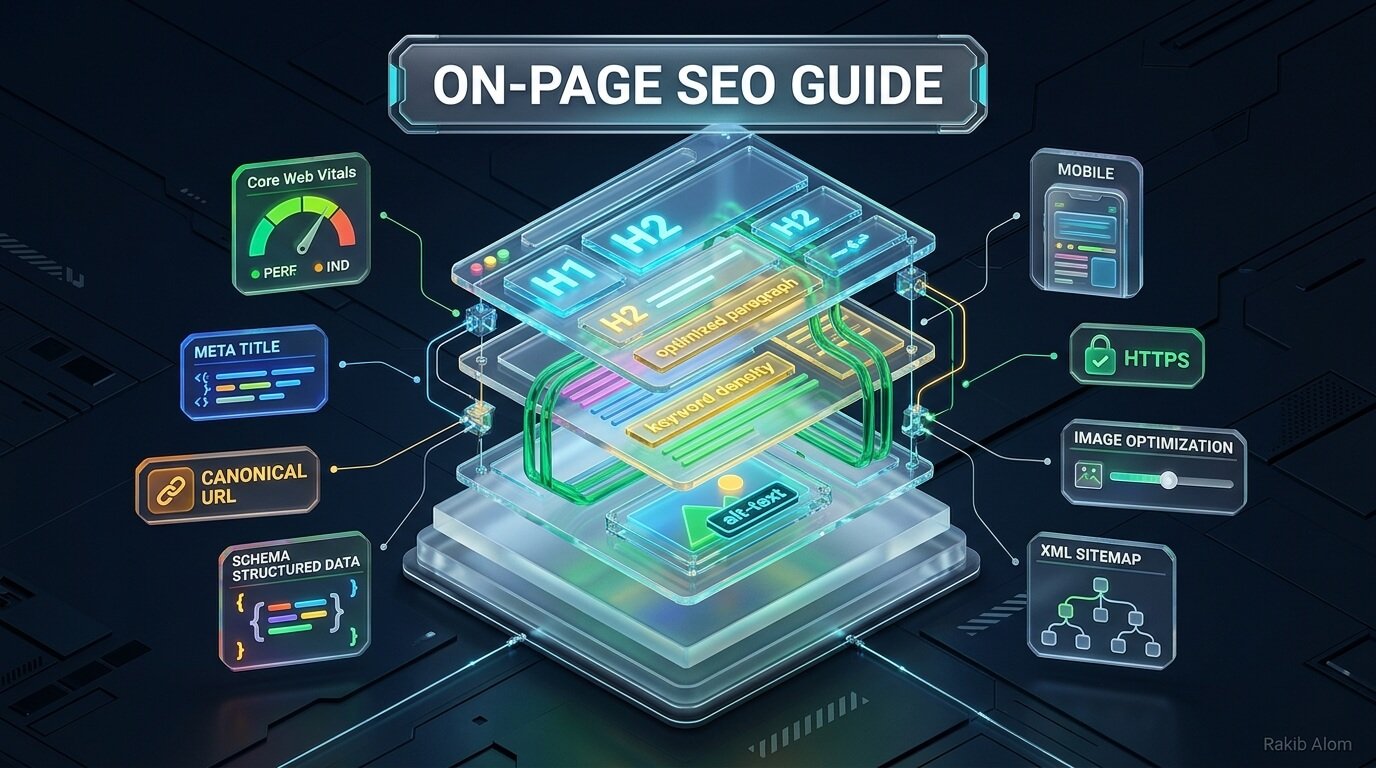
Executive Strategic Summary
Search visibility in modern algorithmic environments requires far more than casual keyword placement or superficial metadata tweaks. Search engines process web documents using sophisticated neural retrieval networks, semantic entity graphs, and multidimensional user satisfaction models. Optimizing individual URLs demands an integrated architecture connecting crawl efficiency, information gain, structural HTML precision, technical performance, and conversion-focused copywriting. This tactical manual establishes a definitive framework for engineering web documents that satisfy algorithmic indexing requirements while capturing, engaging, and converting qualified organic traffic.
Foundations of Modern On-Page Optimization and Entity Economics
Search engines process trillions of web documents through multi-stage computational pipelines designed to extract, evaluate, and rank information based on semantic relevance. The practice of on page seo has undergone a monumental shift from archaic string-matching tactics toward comprehensive semantic entity optimization. Rather than merely counting term frequencies, modern ranking systems parse textual documents as interconnected nodes within expansive knowledge graphs. Every page published online communicates topical authority, editorial quality, and conceptual depth through its underlying source code and visible narrative.
Algorithm updates have accelerated this transition by deploying large language models to understand the nuanced context behind search queries. Search crawlers do not read web pages like human visitors; they parse structured document object models, evaluate hierarchical headings, extract contextual vector embeddings, and measure user experience signals. Implementing disciplined on-page seo standards ensures that your web documents provide clear semantic signals that search engine algorithms can parse, categorize, and prioritize without computational friction.
The economic value of mastering seo on page optimization lies in the compounding nature of organic real estate. While off-page signals like backlinks establish domain trust and authority, on-page factors dictate the exact relevance and topical boundaries of every single page. A technically flawless website with outstanding backlinks will still fail to rank for high-intent commercial terms if the page architecture fails to resolve user search intent. Applying modern on page seo techniques transforms standard articles into resilient ranking assets that retain top positions across algorithmic shifts.
Search engines continuously refine how they gauge informational completeness. Pages that provide comprehensive answers supported by real-world context, practical data points, and unambiguous semantic structures consistently outrank thin, fragmented content. Establishing rigorous on page seo best practices across your publishing workflow eliminates guesswork, shortens the time required for newly published URLs to achieve indexation, and maximizes the organic return on every digital asset created.
The Architecture of a High-Converting SEO Landing Page
Designing a commercial seo landing page requires balancing organic search requirements with persuasive conversion architecture. Many marketing teams make the mistake of creating separate experiences: pages optimized exclusively for search engines that read like mechanical keyword lists, or visually stunning sales pages that search crawlers cannot comprehend. A truly successful digital asset unifies these priorities into an elegant, high-performance interface that satisfies search engine algorithms and human decision-makers simultaneously.
The structural layout of a dedicated seo page must establish immediate topical clarity above the fold. Searchers and automated crawlers must understand the exact purpose of the document within the first few seconds of inspection. When a visitor arrives via a specific transactional or commercial query, the primary heading, accompanying subtext, and initial visual elements must validate that they have landed in the right place. Ambiguity at the top of the page increases immediate bounce rates, which sends negative behavioral signals back to ranking algorithms.
User engagement signals play an instrumental role in sustaining organic rankings over extended periods. Pages that command high dwell times, low bounce rates, and healthy click-through interactions on internal links signal to ranking systems that the content thoroughly fulfilled the user’s information gap. Achieving this level of engagement requires strategic placement of interactive comparison modules, clear calls to action, digestible bullet lists, and frictionless navigation paths. When an organic landing page delivers immediate clarity alongside deep technical substance, organic rankings naturally stabilize near the top of search results.
Information architecture also dictates how search crawlers navigate through the individual sections of your page. Utilizing clean semantic HTML elements ensures that automated user agents can distinguish between primary editorial content, supplementary utility widgets, related resources, and navigational menus. When code bloat, uncompressed scripts, or nested framework wrappers obscure the primary content, search engines waste valuable rendering budget attempting to decipher page hierarchy. Keeping the document layout clean and purposeful ensures seamless indexing and rapid ranking evaluation.
HTML Meta Architecture: SEO Title, SEO Meta Tags, and Meta Descriptions
The metadata header of an HTML document serves as the primary handshake between your web server and search engine indexing bots. Before a search bot renders the visual layout or evaluates paragraphs of body copy, it parses the document head to determine character encoding, canonical status, crawling permissions, and primary document topic. Managing these elements with surgical precision prevents indexation conflicts and ensures optimal presentation across search engine results pages.
The seo title remains one of the single most influential on-page ranking factors in digital search. This element defines the primary clickable headline displayed in search engine results and browser tabs. Crafting an effective title requires balancing strict character limits with compelling psychological triggers. Search engines typically display the first 50 to 60 characters or roughly 600 pixels of a title before applying truncation. Placing your primary target keyword phrase near the beginning of the title tag maximizes its algorithmic weight while immediately signaling topical relevance to scanning searchers.
Accompanying the title tag is the seo meta description, an HTML attribute that provides a concise summary of the page’s core message. While search engines do not utilize meta descriptions as a direct algorithmic ranking factor, this snippet exerts immense influence over organic click-through rates. A compelling meta description operates as free digital advertising copy on the results page. Writing a persuasive summary between 145 and 155 characters that naturally incorporates the primary keyword and outlines a tangible benefit directly drives searchers to choose your listing over competing results.
Beyond titles and summaries, configuring complete seo meta tags protects your site against common technical vulnerabilities. Canonical meta tags instruct search engines which URL represents the authoritative master copy of a document, resolving duplicate content issues that arise from URL tracking parameters or multifaceted eCommerce filtering systems. Robots directives guide crawler behavior regarding indexation and link equity flow, while Open Graph and Twitter Card tags ensure that social platforms present your content with rich visual previews, expanding organic distribution across external referral ecosystems.
Hierarchical Document Taxonomy: Mastering SEO Header Tags and H1 Tags
Structured document hierarchy allows both human readers and search engine crawlers to digest complex topics systematically. In technical documentation, academic papers, and digital web pages alike, headings establish a logical outline that organizes broad concepts into granular, manageable subsections. Without clear heading structures, even the most insightful content becomes an impenetrable wall of text that repels users and confuses search engine language models.
Every published web document must contain a single, authoritative top-level heading managed through seo h1 tags. The primary H1 tag functions as the definitive topic statement of the entire page. It must clearly articulate the core subject matter while incorporating the primary search phrase. Best practices dictate maintaining exactly one H1 element per URL, positioned prominently at the start of the main content area. Using multiple H1 tags dilutes topical focus, creating ambiguity regarding which concept represents the overarching theme of the document.
Subordinate sections must follow a strict, logical progression utilizing structured seo header tags. Heading level two elements define the primary structural pillars of the article, while heading level three and heading level four tags introduce detailed technical nuances within those parent topics. Skipping heading levels—such as jumping directly from an H2 to an H4—violates web accessibility standards and disrupts the semantic hierarchy parsed by search engine screen readers and algorithmic scrapers.
Modern search engines frequently extract direct answers, featured snippets, and generative overview summaries from well-organized heading blocks. When an H2 or H3 tag poses an explicit question or introduces a specific process, followed immediately by a concise, authoritative answer, algorithms can effortlessly extract that section for prominent display at the top of the search results. Structuring your headings with semantic clarity and intentional keyword variations significantly increases your opportunity to capture premium search real estate.
The Discipline of SEO Content Writing and SEO Copywriting
Creating digital text that ranks sustainably while driving business revenue requires mastering two complementary skills: educational content creation and conversion copywriting. The practice of seo content writing focuses on informational depth, pedagogical clarity, comprehensive research, and topical authority. Its primary objective is to solve the reader’s problem, answer their specific queries, and establish your brand as a trusted industry authority.
Conversely, the art of seo copywriting introduces persuasive psychological triggers, strategic positioning, and clear conversion pathways into the text. Copywriting ensures that organic visitors do not merely consume information and exit, but transition smoothly toward downloading resources, booking consultations, or purchasing products. Merging these disciplines creates high-yield digital assets that simultaneously satisfy informational search intent and achieve commercial objectives.
Executing high-caliber seo writing demands strict editorial standards. Gone are the days when repeating an exact keyword phrase ten times within a blog post produced positive ranking results. Today’s search engines penalize unnatural phrasing and reward genuine domain expertise. Writers must focus on expanding the semantic universe of the page by incorporating related concepts, industry terminology, co-occurring entities, and practical examples. Producing thoughtful seo friendly content means writing for human comprehension first while ensuring algorithmic clarity through logical topic sequencing.
Developing truly seo optimized content requires conducting exhaustive competitive research before writing the first sentence. Analyzing the top-ranking documents across your target queries reveals the baseline expectations of the algorithm: the average depth of coverage, the specific subtopics addressed, the types of visual media deployed, and the formatting structures preferred by users. To outrank established competitors, your content must provide superior informational gain—introducing original data, proprietary frameworks, and actionable blueprints that competing pages overlook.
High-performing editorial teams establish systematic workflows that guide every stage of the writing process. From initial outline validation to draft refinement, editors ensure that paragraphs remain focused, arguments progress logically, and transitions between technical concepts remain fluid. By investing in comprehensive seo content production, organizations build durable organic moats that competitors cannot easily replicate with automated, low-effort summaries.
Technical URL Architecture: Engineering Clean SEO URL Structure
The web address of a document represents the first technical indicator of its position within your website’s broader information architecture. A well-engineered seo url structure provides users and search crawlers with immediate contextual clues regarding the document’s content before the page even finishes loading. Clear, intuitive URLs build user trust, improve organic click-through rates, and simplify the hierarchical organization of large digital domains.
Simplicity and brevity should govern every URL slug generated across your content management system. Best practices require stripping out unnecessary stop words, numerical dates, tracking parameters, and generic folder paths. Instead, configure concise slugs that prominently feature the primary target keyword phrase. A clean URL like example.com/services/seo/ communicates immediate topical relevance, whereas example.com/page.php?id=8374&cat=92 reveals nothing to search bots and diminishes organic click confidence.
Maintaining consistent directory depth across your site prevents critical pages from becoming buried deep within the site hierarchy. Pages positioned closer to the root domain typically inherit greater internal authority and receive more frequent crawler visits. Whenever possible, avoid nesting URLs across four or five subdirectories unless managing massive eCommerce taxonomies that necessitate granular category divisions. Utilizing hyphens as word separators—rather than underscores, spaces, or plus signs—ensures that web servers and search engine crawlers parse individual terms accurately.
Handling URL modifications with technical rigor prevents catastrophic loss of historical ranking equity. If an existing URL must be updated to align with modern keyword targeting, implementing a permanent 301 redirect from the legacy URL to the new destination is non-negotiable. Failing to deploy 301 redirects creates broken 404 errors, destroys accumulated backlink equity, and causes rankings to drop across all major search engines. Maintaining a complete redirect log ensures seamless migration whenever site restructuring takes place.
Digital Asset Optimization: Complete SEO Image Optimization Playbook
Visual assets enrich user experience, illustrate intricate technical concepts, and significantly improve average session durations across digital publications. However, unoptimized media files represent the primary culprit behind sluggish page load speeds, bloated server payloads, and poor Core Web Vitals scores. Executing comprehensive seo image optimization balances exceptional visual fidelity with ultra-fast rendering performance.
Modern performance optimization begins with adopting cutting-edge image compression formats. Traditional JPEG and PNG files carry substantial file weights that strain mobile data connections and delay Largest Contentful Paint benchmarks. Converting graphic assets into next-generation formats like WebP or AVIF reduces overall file sizes by 30 to 80 percent without perceptible loss in visual clarity. Serving lightweight media files ensures that pages load nearly instantaneously across desktop and mobile devices alike.
Search engines rely heavily on contextual metadata to interpret the subject matter of visual assets. Image optimization best practices require crafting descriptive, keyword-rich file names prior to uploading assets to the media library. Naming an asset on-page-seo-checklist-diagram.webp provides crawlers with immediate context, whereas generic camera designations like IMG_9021.jpg offer zero informational value. Furthermore, providing accurate, descriptive alt text ensures accessibility for screen-reader users while supplying search engines with semantic descriptions that aid image search indexing.
Implementing responsive image delivery through HTML srcset attributes guarantees that user devices receive appropriately scaled image dimensions. Serving a massive 2400-pixel desktop banner to a smartphone with a 400-pixel screen wastes cellular bandwidth and degrades rendering speeds. Combining responsive image tags with native lazy-loading attributes ensures that off-screen visual assets load only when the visitor scrolls them into the active viewport, conserving browser resources and keeping Core Web Vitals metrics firmly in the optimal range.
Internal Linking Dynamics: Building Topical Authority with Internal Links
Internal link architecture serves as the vascular system of your website, distributing PageRank equity, establishing topical associations, and guiding visitors along cohesive educational journeys. The deliberate deployment of seo internal linking bridges disparate pages into structured topic clusters that demonstrate deep subject matter expertise to search engine algorithms.
Search crawlers discover new content and evaluate the relative importance of existing pages by traversing the hyperlinks connecting your site’s documents. When a cornerstone guide receives dozens of contextual links from supporting subtopic articles, search engines recognize that URL as an authoritative hub within your digital library. Conversely, orphan pages that lack inbound internal links remain virtually invisible to search bots, rarely achieving stable rankings regardless of their individual content quality.
Optimizing the anchor text of internal hyperlinks requires balance and contextual relevance. Unlike external backlinks—where aggressive exact-match anchor text can trigger algorithmic spam penalties—internal links should feature descriptive, keyword-rich anchor phrasing that clearly communicates the topic of the destination URL. Phrases like click here or learn more waste valuable anchor equity. Using descriptive phrases such as review our technical seo checklist or examine conversion rate optimization strategies provides unambiguous semantic signals to search engines.
Establishing deliberate hub-and-spoke content models maximizes the effectiveness of your internal linking efforts. In this architecture, a central comprehensive guide links outward to detailed child pages covering specific subtopics, while every child page links back to the main pillar. This bidirectional equity loop consolidates topical authority, signals comprehensive vertical coverage, and provides users with a structured, intuitive roadmap to explore advanced concepts at their own pace.
Top 5 Audit Platforms: Dedicated On Page SEO Checker Tools
Manual page audits are essential, but auditing hundreds of technical parameters across expansive domains requires enterprise-grade software. Utilizing a specialized on page seo checker empowers digital marketing teams to uncover semantic gaps, benchmark content against top-ranking competitors, and identify critical code errors before they damage organic rankings. Below is a rigorous analysis of the five leading on-page auditing and content optimization platforms available today.
1. Surfer SEO
Surfer SEO represents one of the industry’s most popular data-driven content intelligence platforms, utilizing correlation algorithms to analyze dozens of top-performing pages for any target search query. The platform inspects natural language processing sentiment, entity density, word count distribution, heading frequency, and image counts to generate a real-time Content Score. Writers and editors can draft articles directly within its interactive Content Editor, receiving live guidance regarding which semantic terms to include to achieve competitive parity with ranking rivals.
Beyond content drafting, Surfer provides an in-depth Audit feature that evaluates live URLs against prevailing SERP standards. The audit highlights missing common entities, flags structural deficiencies across heading tags, assesses internal link opportunities, and pinpoints page speed bottlenecks. While the platform offers exceptional content optimization capabilities, its pricing structure can become substantial for agencies managing high monthly article volumes, and its correlation metrics must be balanced with editorial common sense to avoid awkward keyword shoehorning.
2. Semrush
Semrush delivers an expansive, enterprise-grade search marketing suite featuring dedicated on-page auditing utilities, most notably its On Page SEO Checker and SEO Writing Assistant. The On Page SEO Checker analyzes your domain against your top organic rivals, generating actionable recommendation cards categorized by technical optimization, semantic ideas, content length, backlink prospects, and user experience enhancements. This multi-layered perspective ensures that marketing teams do not optimize content in isolation from broader technical realities.
The platform’s SEO Writing Assistant integrates directly into popular word processors like Google Docs, WordPress Gutenberg, and Microsoft Word. It evaluates written drafts across four core dimensions: SEO, Readability, Originality, and Tone of Voice. Semrush excels at identifying semantically related keywords sourced directly from Google’s top ten search results, helping writers expand topic coverage effortlessly. Although the suite commands a premium monthly investment, its comprehensive toolset makes it an indispensable asset for established organizations.
3. Ahrefs
Ahrefs has long been celebrated for its industry-leading backlink index, but its Site Audit platform provides some of the most rigorous technical on-page diagnostics in the digital industry. The cloud-based crawler systematically inspects your entire website, identifying missing title tags, duplicated meta descriptions, broken internal links, redirect chains, canonical errors, and uncompressed visual assets. Its visual dashboards group issues into clear severity tiers, allowing technical teams to address critical crawl blocks before optimizing individual paragraphs.
In addition to technical auditing, Ahrefs offers Content Gap and Page Inspect tools that uncover terms your competitors rank for that your specific URL completely omits. Examining these semantic deficits allows editorial teams to update existing articles with fresh sections that immediately expand organic keyword footprints. While Ahrefs does not feature an interactive real-time text editor like Surfer, its technical audit precision and keyword database depth remain unmatched across the organic search landscape.
4. PageOptimizer Pro
PageOptimizer Pro, commonly known as POP, is an advanced on-page optimization tool developed around patented correlation algorithms and extensive single-variable testing. Unlike tools that rely on generalized recommendations, POP analyzes the exact mathematical positioning of keywords across specific HTML zones, including the title tag, H1, subheadings, anchor text, and body paragraphs. ThisZone-based approach ensures that you provide search engines with exact algorithmic signals without exceeding natural keyword thresholds.
The platform provides clear target ranges for primary keywords, secondary variations, and latent semantic entities based on what is mathematically working for the current top-ranking URLs. POP appeals particularly to technical SEOs and scientific marketers who prioritize algorithmic precision over stylistic suggestions. The interface possesses a steeper learning curve than consumer-oriented alternatives, but its cost-effective pricing plans and rigorous analytical modeling make it a formidable weapon for competitive search niches.
5. Screaming Frog SEO Spider
Screaming Frog SEO Spider is the premier desktop crawler utilized by technical optimization specialists worldwide to diagnose website architecture at scale. Installed locally on your computer, this powerful software crawls entire domains, extracting comprehensive on-page data including HTTP status codes, title tag lengths, meta description pixels, H1 and H2 structures, canonical directives, structured data validation, and image weights. It operates with unmatched speed, allowing SEO professionals to audit thousands of URLs in minutes.
Screaming Frog provides direct integrations with Google Search Console, Google Analytics, and PageSpeed Insights APIs, merging technical crawl data with actual traffic and performance metrics. It excels at identifying sitewide structural issues such as orphan pages, duplicate content clusters, and internal PageRank distribution imbalances. While it does not provide writing advice or semantic entity suggestions, it is the ultimate foundational tool for ensuring that every page on your site adheres to strict technical on-page specifications.
Comprehensive On-Page SEO Checklist and Strategic Audit Matrix
Systematic execution requires a structured auditing framework that prevents critical optimization elements from slipping through the cracks. Utilizing an authoritative on page seo checklist ensures that every writer, developer, and marketing manager adheres to the same uncompromising quality standards before pushing content to production. Reviewing each technical zone methodically transforms scattered optimization efforts into a repeatable, high-yield business process.
The matrix below outlines the critical zones of on-page optimization, detailing the specific technical requirements, priority tiers, evaluation criteria, and common operational pitfalls associated with each element.
| Optimization Zone | Technical Standard | Algorithmic Priority | Primary Evaluation Metric | Common Pitfall to Avoid |
|---|---|---|---|---|
| Title Tag Architecture | 50–60 characters (max 600px width), primary keyword upfront | Critical | SERP Click-Through Rate & Relevance | Keyword stuffing, exceeding pixel boundary |
| Meta Description | 145–155 characters, natural keyword integration, actionable CTA | Medium (CTR Impact) | Organic CTR & Snippet Presentation | Generic copy, missing clear value proposition |
| Primary H1 Heading | Exactly one H1 per page, top-of-body placement, topical clarity | High | Semantic Document Classification | Multiple H1 tags, mismatching search intent |
| Subheading Hierarchy | Sequential H2 -> H3 -> H4 nesting, semantic subtopic grouping | High | Featured Snippet & Outline Clarity | Skipping levels, styling divs as fake headings |
| URL Slug Structure | Short, lowercase, hyphen-separated, keyword-rich slug | High | Crawl Hierarchy & User Trust | Dates in URLs, deep multi-folder nesting |
| Editorial Content Body | Exhaustive coverage, entity richness, original data, clear prose | Critical | Information Gain & Dwell Time | Thin content, AI fluff, keyword stuffing |
| Visual Asset Integration | WebP/AVIF format, descriptive alt tags, responsive dimensions | Medium | Largest Contentful Paint (LCP) & UX | Massive uncompressed PNGs, empty alt tags |
| Internal Link Network | Descriptive anchor text, contextual links to topic cluster nodes | High | PageRank Distribution & Topical Depth | Generic ‘read more’ anchors, orphan pages |
| Structured Data Schema | JSON-LD syntax, Article/FAQ/Breadcrumb schemas validated | Medium-High | Rich Snippet Eligibility & Entity Links | Syntax errors, inaccurate schema markup types |
Advanced Optimization: Generative Search Engines and Entity Modeling
The emergence of AI Overviews, generative search engines, and conversational answer bots has fundamentally changed the rules of digital discovery. Search engines are rapidly transitioning from search engines into answer engines, synthesizing multiple web sources to construct immediate conversational summaries directly on the search results interface. Navigating this new reality requires augmenting conventional ranking tactics with Generative Engine Optimization principles.
Generative search models prioritize content that exhibits high information density, unambiguous factual statements, and verifiable real-world authority. When an article presents vague generalities or generic advice, generative algorithms skip over the text in favor of sources that offer specific statistics, proprietary frameworks, and concrete execution steps. Providing direct, structured answers within the first two sentences following a subheading dramatically increases the likelihood that AI retrieval systems will cite your page as a primary source.
Semantic entity modeling reinforces your website’s authoritative standing across automated indexing graphs. Ensuring that your content explicitly defines key industry concepts, references established authority figures, and utilizes recognized Schema.org structured data types connects your digital assets directly into the global knowledge graph. By establishing clear entity relationships, your web pages become verified nodes of trusted information that algorithms confidently recommend to users seeking definitive guidance.
User-centric design and technical performance remain the ultimate arbiters of sustained organic success. No amount of semantic optimization can compensate for an interface that frustrates human visitors with sluggish responsiveness, erratic layout shifts, or intrusive popups. Aligning technical excellence with editorial rigor guarantees that your website satisfies algorithmic crawlers today while remaining fully prepared for the future of search.
Frequently Asked Questions About On-Page Optimization
What is on page seo and why is it critical for ranking success?
The practice of on page seo involves optimizing individual web page elements, including HTML code, metadata, editorial copy, and internal links, to improve search engine rankings and attract targeted organic visitors. While external signals establish overall website authority, on-page optimization directly dictates the topical relevance and commercial intent alignment of each specific URL. Without thorough page-level optimization, even powerful domains fail to achieve top rankings for competitive commercial queries.
How do seo header tags influence organic rankings and user engagement?
Properly structured seo header tags create a clear semantic outline that allows search engine crawlers and human readers to navigate complex information effortlessly. Using a single H1 tag for the main topic and logical H2 and H3 tags for supporting sections helps search algorithms extract key concepts for featured snippets and AI Overviews. Furthermore, clear headings improve page readability, reduce bounce rates, and increase user dwell time across all digital devices.
What is the difference between seo content writing and traditional copywriting?
Informational seo content writing focuses on providing comprehensive educational answers, resolving user search intent, and building topical authority around specific search queries. In contrast, conversion-focused seo copywriting integrates persuasive psychological triggers, strategic positioning, and clear calls to action to guide visitors toward completing measurable commercial actions. Combining both disciplines ensures that your content ranks highly in search engines while actively driving business revenue.
How does seo image optimization contribute to better page performance?
Comprehensive seo image optimization involves compressing media files into modern formats like WebP or AVIF, establishing responsive dimensions, and adding descriptive alt text. These technical enhancements dramatically reduce overall page weight and improve Largest Contentful Paint benchmarks within Google Core Web Vitals. Simultaneously, keyword-rich filenames and descriptive alt text supply search engine crawlers with contextual information that aids indexing in Google Image search.